

A plain-English glossary of the terms every coach uses, from coachee to GROW, plus the words we use in happiness management. Use it as a quick reference, and follow the links at the end for tools and exercises that put these ideas to work.
The basics
What is coaching?
Coaching is a process (a method, a discipline, a technique) that helps people reach their dreams, goals and objectives. It helps a client, whether an individual or a company, get the results they set out to achieve.
Is coaching a profession or a discipline?
In most countries coaching is not a regulated profession in the way medicine or law are, and a few universities offer it as a degree. In many places it is a vocational training. Whoever you work with, check what their training actually involved.
What is a coach?
A coach is the person who runs the coaching process with a client. A coach does not need expert knowledge of the client’s problem. Rather than giving answers, a coach asks questions that help the client explore the present and design the future. The coach walks alongside the client, lets them feel their dreams and checks whether the person is aligned with their life project. The relationship rests on trust and, ideally, on a service agreement agreed beforehand. You will know quite soon whether it is producing results.
What a coach is not
A good coach will not let you spend the session retelling your story. Session time is precious: it goes straight to what is blocking you and ends with a commitment, with tasks you take home. Save the long conversation for a coffee with friends. A good session flies by, and you leave with ideas to work on all week.
What is a coachee?
Coachee is a slang word for a coach’s client. The correct term is simply client. We have a short guide on how to explain what coaching is to people who have never tried it.
Do I need a coach, and how do I choose a good one?
Everyone needs help at some point, and it matters to find the right person. You do not need a coach all the time, only when you need one. A good coach speaks a language close to yours and earns your trust quickly. They do not need an MBA or five accreditations, but they do need life experience (or crisis) that helps them understand your situation without judging it. Empathy and listening matter far more than a certificate.
How much does a coach cost?
There is no official price list and rates vary by market, country and experience. A typical individual session often falls somewhere between 50 and 200 euros or dollars, roughly double for companies, and much more for senior executives. Many coaches sell a programme rather than single sessions.
Types of coaching
Personal coaching (life coaching)
Personal coaching focuses on private life, work, health and relationships. Life coaching is the English name for the same thing. People who work this way usually get:
- higher performance and greater commitment;
- more self-confidence and self-knowledge;
- clearer goals and values;
- a more balanced life and better quality of life;
- new options and perspectives, and a plan of action.
The personal growth wheel is a good place to start.
Executive and business coaching
Executive coaching helps managers who face a permanent tension between the need for results in a competitive world and the resources needed to deliver them: knowledge, time and money. Business coaching takes the ideas of sports coaching into organisations to speed up the learning of managers and teams. Our professional wheel of life is a gentle way in.
Career coaching
Career coaching supports people who are job hunting or who do not know what to do with their working life. A life map is a good first step.
Sports coaching
Sports coaching is tied to the figure of the trainer, who leads and mobilises a team. For the leisure side of life, try the leisure wheel.
Health coaching
Health coaching gives you structure to build lasting wellbeing and to weave healthy habits into your life step by step, across physical, mental and spiritual health. See the health wheel.
Autocoaching
Autocoaching is less a type of coaching than a method that supports all the others. It helps you know yourself and get the best from yourself without a coach in the room. It is built on the Coaching of Variety, a complete taxonomy of the components of happiness. Read more in our autocoaching methodology.
Coaching models at a glance
| Model | Core idea | Best known for |
|---|---|---|
| Ontological coaching | Analyses mental acts, language and the way we express ourselves | Roots in the phenomenology of Martin Heidegger |
| Systemic coaching | Looks at the person within their social and organisational system | Learning and change in people, teams and organisations |
| Co-Active coaching | People are creative, resourceful and whole; the coach asks and listens | Fulfilment, balance and process |
| Tavistock model | Understands the individual through their context, past and surroundings | Psychoanalytic roots |
| DBM (Developmental Behavioural Modelling) | Behaviour-change techniques aimed at goals | Born from NLP |
| CoachVille model | Closes the gap between where you are and where you want to be in five steps | Thomas Leonard |
| GROW | Goal, reality, options, will; structured and results-oriented | John Whitmore |
| Humanistic models | Transactional analysis and person-centred work | Eric Berne, Carl Rogers |
| Emotional intelligence | Recognise and manage emotions in yourself and others | Daniel Goleman |
| Positive psychology | Studies resilience and what helps people flourish | Martin Seligman |
For more on a few of these, see Co-Active, the GROW model, Daniel Goleman, Chris Argyris (organisational learning) and the Tavistock Institute.
The CoachVille conversation has five steps: the subject, the goal, the reality of the present situation, the options for reaching the goal and the commitment to act. You can see this kind of structure at work in our 12 good coaching conversations.
Key terms, A to Z
- Action
- An activity through which a change is carried out.
- Belief
- A personal opinion or point of view about some area of life, often taken as unquestionable truth. See the types of beliefs and how beliefs are formed.
- Change
- An action you commit to that moves you towards a goal.
- Commitment
- The personal determination to meet your goals through action. Before setting goals, check that you are truly committed to them. It has to come from within.
- Crisis
- A sudden change in some aspect of life that can pull us away from happiness and disconnect us from our essence. It can also be an opportunity to reflect.
- Depression
- A prolonged state of unhappiness. In coaching, this is a sign to involve a qualified health professional.
- Emotions
- Mental responses to stimuli that produce a way of feeling and move us to act.
- Factors (conditions)
- The things a person needs (necessary factors) or would like (motivating factors) in order to be happy in each area of the wheel of life. See the Coaching of Variety.
- Goal (objective)
- A desired result. The two words are used interchangeably.
- Happiness
- A state of mind that comes from success in one or more areas of life. We tend to be happy when the areas of the wheel of life score high enough. It is subjective and changes over time.
- Learning
- The process of gaining skills and knowledge through experience.
- Life map
- A tool that expands and details each area of the wheel of life, giving you a snapshot of your happiness so you can see where to start. See how to make a life map.
- Motivation
- The reason that drives and strengthens the will to act.
- Opportunity cost
- The gain or loss tied to each option you give up when you make a change.
- Prejudice
- Judging before you have full knowledge, based on generalisations or false inferences.
- Reminder
- Anything that helps you keep your goals and motivations in sight every day.
- Resource
- Anything that can help you reach your goals.
- Stereotype
- An image or idea repeated without checking that it is true.
- Success
- The happy result of an effort. It means different things to different people.
- Trust
- The quality of the relationship between coach and client that makes coaching work.
- Values
- The principles by which each person decides how to be, feel and act in the world. Try our values exercises.
- Visualisation (acting as if)
- Using the imagination to explore the consequences of actions before they happen.
- Wheel of life
- A tool that shows your state of happiness across the areas of your life. See how to do a wheel of life.
- Your future self (dreams)
- The goals you want to reach in life. Many schools call this a life purpose, and in business a vision.
Where to go next
Be careful with the discipline: unfortunately there are plenty of poor-quality offers out there. A good way to judge a coach is to try the tools yourself first. These will help:
If you work with teams, Happiness Play Pro brings these ideas into organisations, and the Happiness Play platform lets you try them on your own life for free.
Apply what you have learned to your wheel of life
To put it into practice, read how to make changes in your life.
Look at one area at a time:
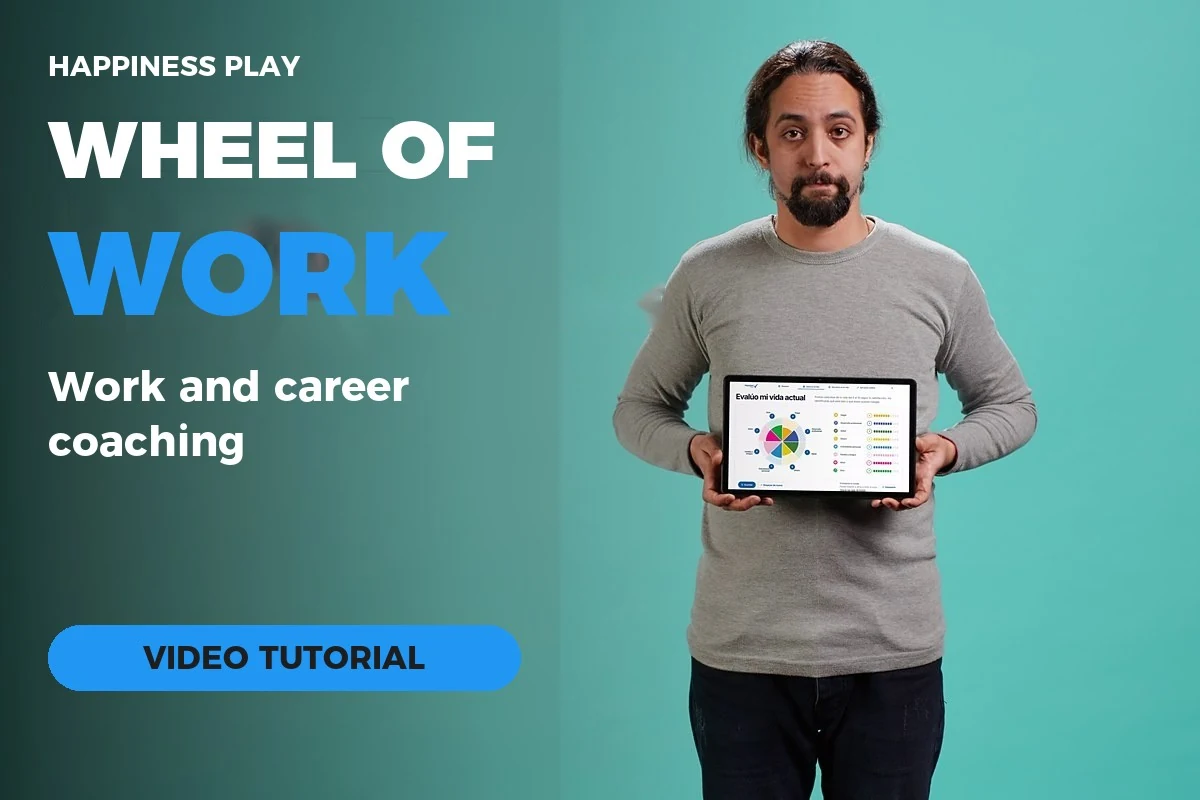 Work wheel
 Family and friends wheel
 Health wheel
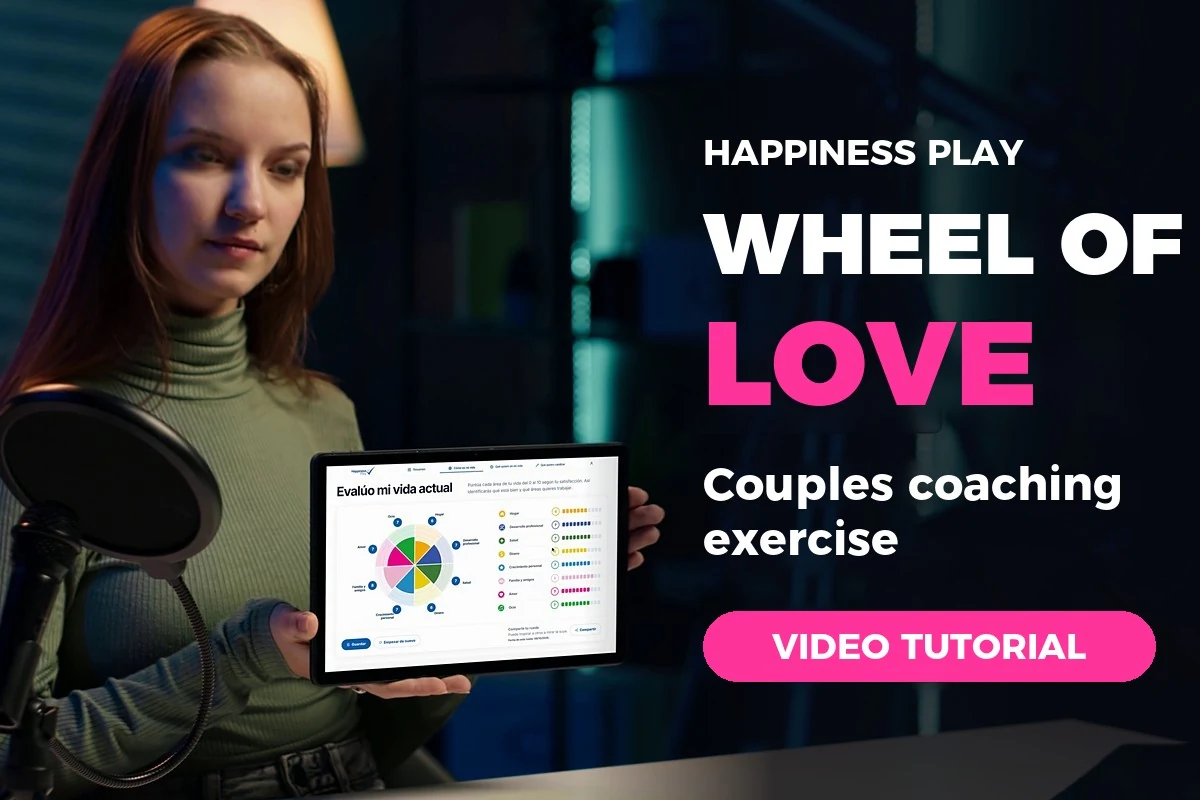 Love wheel
 Money wheel
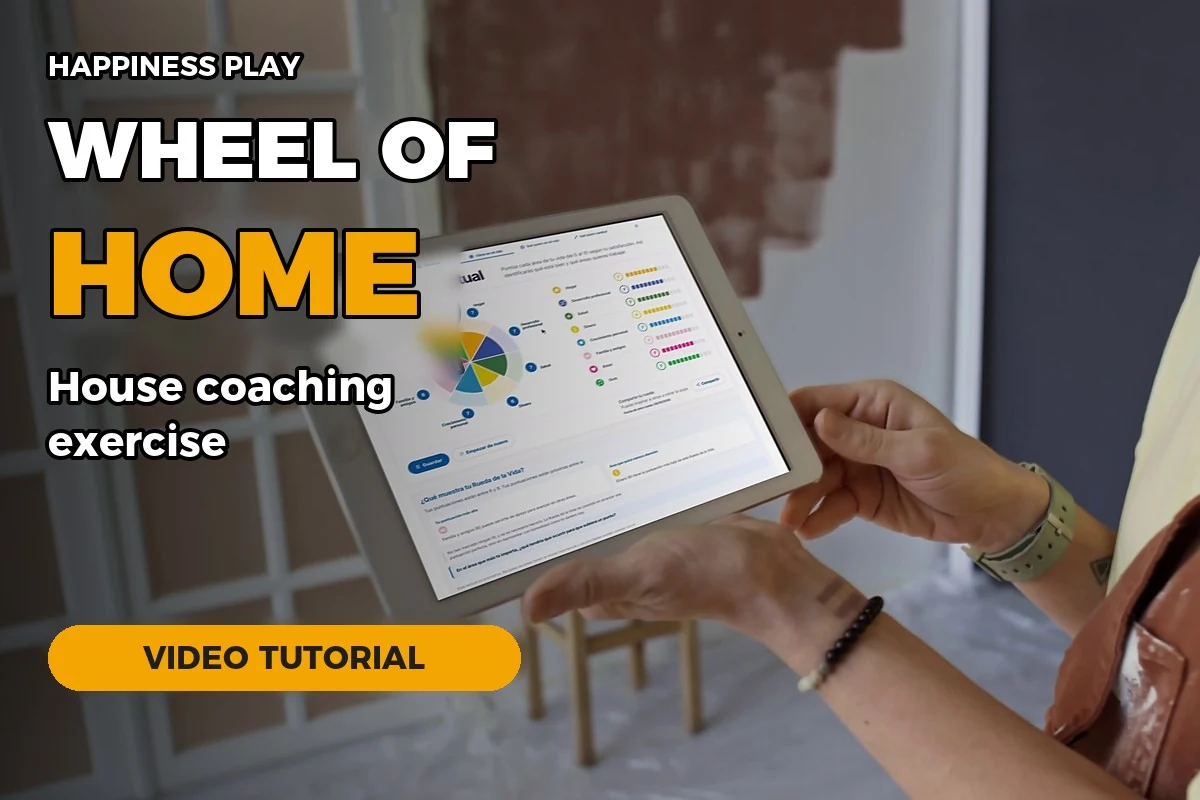 Home wheel
 Leisure wheel
 Personal growth wheel

