


Happiness is a goal we all share, but do we really know what it is and how to reach it? Over a lifetime we feel everything from intense pain to deep pleasure, and yet happiness seems something subtler. Today organisations need to be sustainable, and employees are understood to matter more than ever. Human resources leaders need strategic tools to apply best practice. They have to help every employee, which means managing information so they can decide with knowledge and act quickly.
But if the aim of a company is to make a profit, is it really necessary to make employees happy? Does a happy employee bring more benefit? And how do you get happy employees? That is what this guide looks at.
Do I need happy employees?
It is a myth about happiness that a happy employee automatically produces better results. We hear again and again that workers’ happiness has a direct impact on a company’s success. There is a tendency to believe that everything presented as “the science of happiness” in the workplace is positive. It can also have negative effects: it can harm relationships with managers, with friends and family, and even make a person more selfish (Cederström and Spicer, 2015, in The Wellness Syndrome). A number of articles and books have recently criticised positive thinking and the obsession with happiness.
A little experience in business consulting or systemic coaching shows that putting two very happy people together does not directly produce better results. Giving them a happier, healthier environment with more wellbeing, however, does raise the chances of productivity. Put the focus on the system, not just on the individual employee. Otherwise you can fall into the trap of caring for one person’s happiness at the expense of the organisation’s results. Understanding that idea is basic to working on the employee experience.
| Common belief | A more useful view |
|---|---|
| Happy employees always perform better | A healthy, supportive environment raises the odds of good performance |
| The company is responsible for my happiness | The company can help; happiness is a shared responsibility |
| Measure it and it will improve | Measuring starts the conversation; managing is what changes things |
Whose responsibility is an employee’s happiness?
Many companies, even governments, are trying to manage the happiness of their employees or citizens. As an intention it is among the best seen in recent decades, but it remains to be proven that happier employees build more productive companies. We watched corporate social responsibility grow years ago, and we also saw a respected car maker cheat on emissions tests to save costs. Back to happiness: after that experience, we can expect some companies to say they work for their staff’s happiness while a later case shows the opposite.
A company works for its bottom line, and the rest is optional and should be properly audited to avoid deception. Knowing how to be happy in life is something to work on person by person, with the company supporting that with tools. But the company has to stay focused on its strategy: income, growth and how it produces.
It would be ideal if the company took care of our happiness, our training, our housing, our children’s education and our family health. But then what responsibility would be left to the employee? The studies point the same way: a survey of more than 20,000 people concluded that what matters most for wellbeing is social relationships and physical and mental health, and that having a partner raises happiness by around 0.6 percent. By that logic, a company should also worry about whether we have a partner. The conclusion: the company or the government should help as much as it can, but happiness is our shared responsibility. So why not provide tools that really help us manage it?
How do I build a happy organisation?
Healthy (happy) organisations do produce better results and are more sustainable. Ready to go beyond statistics and into action? You need a complete solution that helps employees see how they feel, choose what they want and learn to take responsibility for their own happiness. Happiness Play Pro is the software solution for HR directors that helps companies reach productivity fast by supporting employees to be more motivated, loyal and professional through personal growth.
What a happy-employees programme gives you
- Innovative technology: a complete cloud-based system that adapts to any device.
- Control of the whole process: individual tracking shows how engaged each user is and how much co-responsibility each employee takes in managing their happiness.
- Climate measurement: after some time using the tool, you get full statistics on users’ preferences by attribute (gender, region and so on) so you can build action plans.
For a worked example of the numbers side, read how to make a happiness dashboard, and for team conversations see coaching tools.
If happy employees interest you, look at your own professional wheel
Start with the wheel of life or learn to make a personal life map:
 Work wheel
 Family and friends wheel
 Health wheel
 Love wheel
 Money wheel
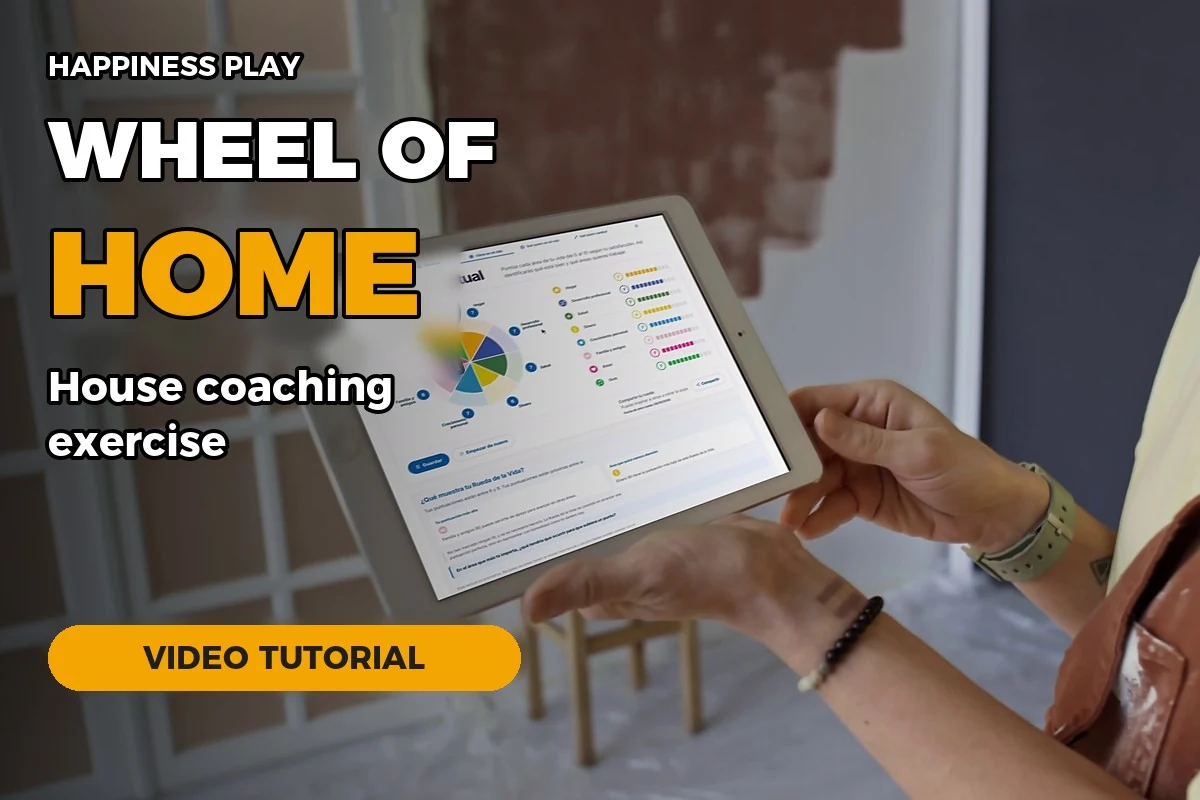 Home wheel
 Leisure wheel
 Personal growth wheel

