

Since time immemorial people have asked what happiness really is. We keep hoping for a formula or a piece of advice that gives our lives meaning, especially when negative episodes make us doubt all of our beliefs. I have been through some of the worst crises a person in the Western world can face, and I never found a pill or a quick tip that made me happy for ever.
Aristotle was right: everyone agrees, and nobody agrees
After years of study I reached the same conclusion as Aristotle, who observed that happiness is easy to understand because we all agree it is a supreme good, yet opinions differ widely about what it is. What brings immense pleasure to one person can be a punishment for another. So who will be the religious or political leader who leads us all to happiness? Which company will manufacture the Viagra of happiness? Enough fairy tales.
We are responsible for our own happiness. Since it is entirely subjective, we should not follow universal formulas or tips that may not apply to us. What does help is using methods that show us the steps to work on our own happiness.
A method, not a recipe
At Autocoaching® we built a complete methodology that shares the basic principle of coaching: take responsibility for your life and commit to the changes that lead to your happiness. It is not coaching, but it gives you strong support. You do not need to study coaching to know that, just as nobody can perform surgery on themselves, coaching yourself makes little sense. The method works like a crutch that helps you walk when you have lost your fitness. You still have to learn to use it, so that you can walk without it as soon as possible. And the support of a professional (a coach, a psychologist, a mentor) is very valuable for getting back in shape faster.
The four steps at a glance
| Step | The question | What you do |
|---|---|---|
| 1. Values and future self | Who am I and where do I want to go? | Detect your values, beliefs and My Future Self (your dreams and goals). |
| 2. How we are | Where am I today? | Take a first snapshot of your wheel of life and your happiness with the life map. |
| 3. What we want | What do I want in each area? | Write your wish list, like a letter to Santa, and rank each item by need and motivation. |
| 4. What I will change | What will I actually do? | Set the changes, with committed dates and the rewards you will give yourself. |
By values we mean the principles that shape how each person is, feels and acts in the world. By beliefs, our personal opinions about the different areas of life. And My Future Self refers to the dreams and goals you want to reach. For steps three and four there is the variety coaching catalogue of tastes, which took two years of research and includes more than 74,000 options and more than 14,000 suggested changes.
Once your values, beliefs and future self are clear, you take a first snapshot to see what fills you with satisfaction and what worries you. For the areas that worry you, you write a full list of what you would like, and the process ends with managing the changes you need to get what you want and do not yet have.
After the method, commitment
This method helps you find the keys to your own happiness, and it is yours alone. But once you have spent time clarifying your state, your wishes and the changes you need, only your commitment will produce results. Your happiness is generated when you switch on your inner motor and get to work. Enough complaining in empty phrases. Let us take responsibility for our lives, a precious gift we need to start valuing before it is too late.
Pedro Amador – Founding partner, Happiness Play
Take your first snapshot with the wheel of life
To see the taxonomy behind it, read about the Coaching of Variety.
Start with how to do a wheel of life, or explore one area at a time:
 Work and career
 Love and relationships
 Money and finances
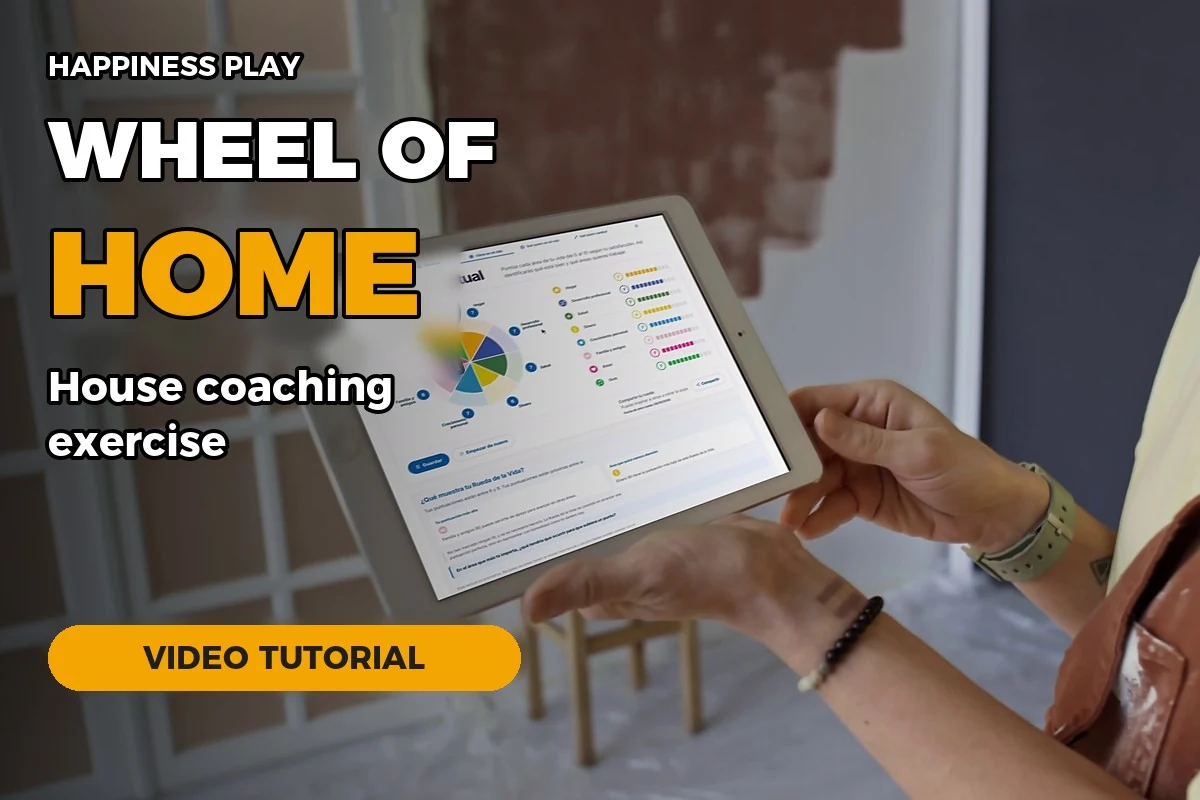 Home and living space
 Family and friends
 Health and habits
 Leisure and free time
 Personal growth

